
Ninety Years of Monopoly—and the Story of an Economic Metaphor
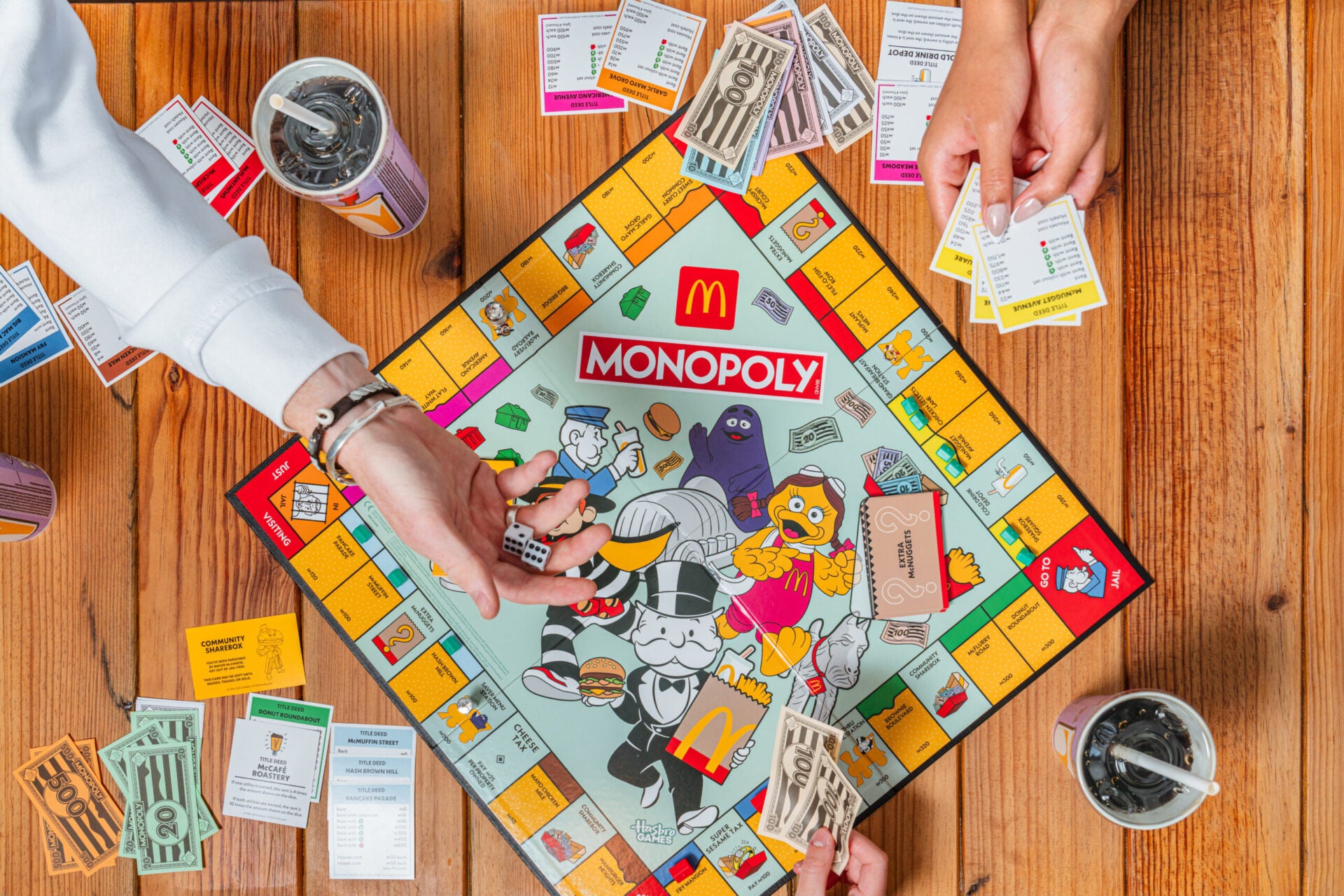
A game born in 1935 as a “new craze” marks 90 years in 2025 in precisely the commercial form that turned it into a global hit. “Monopoly” is considered the best-selling licensed board game, and its recognizability has long since extended beyond the entertainment market and become part of mass culture.
The brand’s long life is also evident in local figures. In Australia, where the game has been present since 1937, more than 390,000 copies have been sold to date. At the same time, an intergenerational attachment to the family-game format persists, and studies regularly cite nostalgia as one of the factors sustaining demand for classic boxed board games.
How “The Landlord’s Game” Taught People to Debate Economics
The origins of “Monopoly” lie in The Landlord’s Game, created in 1903 by Elizabeth Magie. The project was conceived as an accessible, illustrative critique of monopolistic land ownership and as a popular explanation of economist Henry George’s ideas about the “single tax” on land value. In this model, individuals keep what they earn, and public revenue is generated through land rent.
Magie’s key device was two sets of rules that showed how different tax decisions change the trajectory of players’ prosperity. In simplified form, the logic looked like this:
- a mode in which the system encourages accumulation leads more quickly to a concentration of assets among a limited circle of participants
- a mode in which the emphasis is on redistribution reduces the gap and changes the pace at which players are ruined
- the contrast between an income tax and a land tax worked as a teaching model, rather than as neutral mechanics for leisure
This design made the game resemble an economic experiment, where the rules act as a stand-in for public policy, and the outcome of a game reflects the incentives built in.
Darrow, Parker Brothers, and a Shift in Meaning
In 1935, Charles Darrow removed the “socialist” component tied to land-value taxation, renamed the game Monopoly, and sold it to Parker Brothers. The commercial version made buying up property and driving rivals into bankruptcy the central objective, until only one winner remains, while the educational debate about the fairness of the rules was effectively sidelined.
That same year, 1935, cemented the legal side of the story. Parker Brothers paid Elizabeth Magie $500 (about $11,800 in today’s money), thereby reduced the risk of disputes over the original source. The company also released a variant closer to the original concept, but it did not gain mass popularity, and public memory ultimately solidified the “capitalist” success narrative.
The game’s political reputation has also been mixed. In 1959, Fidel Castro ordered all “Monopoly” sets in Cuba to be destroyed, viewing them as a symbol of an undesirable economic model, and this episode is still cited as an example of a board game colliding with ideology.
Arguments Over the Rules and House-Rule Rewrites
Philip Orbanes, former Vice President of Research at Parker Brothers, formulated a “recipe” for a successful board game through three pillars. These are clear rules, social interaction, and an element of luck that keeps outcomes from being fully predictable. “Monopoly” is indeed built on these principles, which helps explain its staying power as at-home entertainment.
At the same time, the rules are often the source of conflicts. Hasbro, which has owned the brand since acquiring Parker Brothers in 1991, reported based on survey results that nearly half of games end in arguments, most often over differing interpretations. In the same studies, 68% of players admitted they had not read the rules in full, and 49% said they had made up their own, although the methodological details of such surveys are usually not disclosed, limiting the precision of comparisons.
Typical “house” changes include:
- a cash bonus for landing on “Free Parking,” which speeds up the circulation of money and changes the pace of the game
- tweaks to auctions to avoid long lulls and make bidding more active
- softening certain penalties, when players try to reduce the sense of inequality baked into the bankruptcy mechanics
This practice turns the game into a form of living folklore, where the official rulebook competes with family tradition.
At the same time, it is noted that over the past decade “Monopoly” has become less popular. This is due not only to the fact that more and more other board games are appearing, but also to the abundance of alternative entertainment. Primarily, this refers to video games; however, it is also worth noting the rapid growth of the iGaming segment. It offers more and more new mechanics, such as arcade-style crash games Jet X, Lucky Jet, Aviatrix, Aviator.
Many see their advantage in the fact that this is entertainment for one person. Of course, the same Jet X online game, if desired, makes it possible to feel part of a community, but for that you don’t need to get a group together, as you do to play “Monopoly.” For a modern person with their perpetual lack of time, arcade games often look preferable to board games. This is especially true of “Monopoly” with its hours-long financial battles.
Local Squares, Licensing, and the Economics of Collecting
One reason for Monopoly’s global success is its connection to real-world locations and the ease of swapping out place names without reworking the underlying mechanics. The first board reflected the socioeconomic hierarchy of Atlantic City, and later the same logic became the basis for adaptations for different countries. In 1936, Waddingtons released an English version under license, where Boardwalk and Mediterranean Avenue turned into London’s Mayfair and Old Kent Road, and it was this edition lineage that then reached Australia in 1937.
Licensing became an industry in its own right. Hasbro regarded “Monopoly” as a flagship asset, and in 2018 the brand was valued at roughly $272 million, while more than 3,400 versions are believed to exist in circulation, according to widely cited counts. The collector scale is illustrated by a record held by Neil Scanlon, who owns 4,379 sets, and he continues to search for rare editions, including a Cronulla Sharks set.
From Teaching Aid to Political Metaphor
Economists and teachers often use “Monopoly” as an accessible language for talking about capitalism, wealth accumulation, and market control. In this role, the game simultaneously demonstrates the allure of the promise to “get rich” and the vulnerability of a system in which a run of lucky moves and early advantages can become entrenched for a long time, especially with a high share of randomness.
In Australia, the history of “Monopoly” has also been used as a political frame. In 2023, federal MP Andrew Leigh referred to the game’s origins while discussing the growing concentration of business monopolies and the impact of such concentration on families, while also mentioning measures by the Albanese government, including increased penalties for anticompetitive conduct and a ban on unfair contract terms. Against this backdrop, Hasbro in 2025 rolled out editions with digital banking, while part of the audience continues to value “paper” money as a tactile symbol of the old game and the old debates over what, exactly, the game celebrates.